
Registering a domain name often starts with a simple decision: choose an address for your website.
But once you find a name you like, the registration page presents you with more choices.
Should you also buy the .net version?
What about .org, .co, .shop, or your country’s domain extension?
And should you register common misspellings before someone else does?

These questions are understandable. Your domain name may appear on your business cards, invoices, advertisements, and email addresses.
Once customers associate that address with your company, losing visitors to a confusingly similar domain becomes a legitimate concern.
However, purchasing every available extension is rarely the right solution.
It creates ongoing costs, adds administrative work, and still cannot prevent every possible variation of your name from appearing online.
For most businesses, the best approach is to register one strong primary domain and a carefully selected group of additional domains that serve specific purposes.
Those purposes might include reducing customer confusion, supporting a geographic market, or protecting an important version of your brand.
This guide explains how to make those decisions without spending money on a collection of domains you do not need.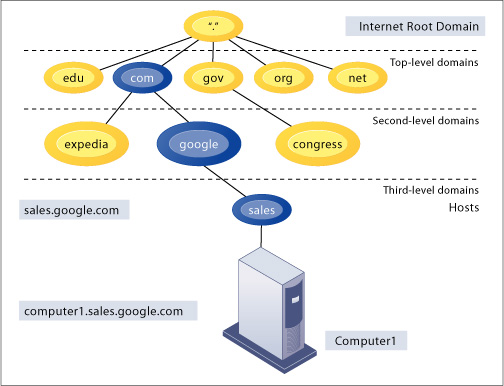
What Is a Domain Extension?
A domain extension is the ending of a domain name. In example.com, the extension is .com.
The technical term is top-level domain, usually shortened to TLD.
Some extensions are general in nature. These include familiar options such as .com, .net, and .org, as well as descriptive endings such as .shop, .photography, and .technology.
These are generally referred to as generic top-level domains, or gTLDs.
Other extensions are associated with countries or territories. Examples include .ca for Canada, .de for Germany, and .uk for the United Kingdom.
These are called country-code top-level domains, or ccTLDs.
Each domain name is a separate registration. Registering example.com does not automatically give you example.net, example.org, or any other version.
If you want another available version, you must register and maintain it separately.
Some extensions also have eligibility requirements. Before choosing a domain, check both its availability and the rules for registering it.
Do You Really Need Every Domain Extension?
No. Most businesses do not need every extension, and attempting to register all of them would be impractical.
Your customers are unlikely to try every possible ending when searching for your website.
They are more likely to use a search engine, follow a link, click a saved bookmark, or type the address they remember from your marketing.
That does not mean additional domains have no value. It means their value depends on how your customers behave and what your business needs.
A local service company may benefit from owning its main country-code domain and the matching .com.
An established brand may have a reason to maintain a broader collection. A personal blog may operate perfectly well with one domain.
The important question is not, “How many extensions are available?”
It is, “Which additional domains would solve a real problem for my business?”
Choose Your Primary Domain First
Before purchasing alternatives, decide which address will represent your business publicly.
Your primary domain should be the address you use consistently on your website, email accounts, social profiles, directory listings, advertisements, and printed materials.
Consistency helps customers recognize your business and reduces uncertainty about which website is official.
A good domain is generally easy to read, say aloud, spell, and remember.
Avoid unnecessary complexity, especially if people will hear the address in conversations, podcasts, videos, or telephone calls.
A short name can still be confusing if its spelling is unusual.
A slightly longer name may work better if people understand it immediately.
Numbers, hyphens, abbreviations, and creative spellings should be evaluated from the customer’s perspective.
Imagine giving the address to someone over the phone.
Would you need to explain whether a number is written as a digit, whether a word is abbreviated, or where the hyphen belongs? If so, consider whether a clearer option is available.
Additional registrations can help catch mistakes, but they are not a substitute for choosing a usable primary address.
Should You Prioritize the .com Version?
A .com domain is a familiar choice for a business serving a broad audience. If the matching .com is available at a reasonable cost, it is worth considering.
However, .com is not the only suitable option. A business focused on Canadian customers may prefer .ca. An organization may find .org appropriate for its identity.
A store may choose a descriptive extension that works naturally with its name.
The practical issue is customer expectation. If you use another extension, will customers remember it, or will they repeatedly assume your address ends in .com?
If that confusion is likely and the matching .com is available, registering it and directing visitors to your main website may be useful.
If it is unavailable or expensive, you should assess whether your chosen name remains clear enough to use confidently.
Do not assume that a different extension makes a website less capable of appearing in search results.
Google states that a generic top-level domain does not automatically determine a site’s search performance.
Choose your extension for its suitability, clarity, and long-term practicality.

When Is a Country-Code Domain Worth Buying?
A country-code domain can be useful when a particular country is central to your business.
For example, a Canadian company serving Canadian customers may find a .ca address a natural fit.
A company expanding into another country may consider the corresponding domain if it supports an actual regional strategy.
Country-code domains can also provide geographic signals to users and search engines.
Google identifies country-code extensions as one of the signals it uses to understand a website’s intended audience, while treating some extensions as generic exceptions.
However, registering a country-code domain does not automatically create a successful presence in that market.
Customers may still need appropriate language, pricing, delivery information, contact details, and support.
There is also a difference between reserving a domain and operating a separate regional website.
You might register a country-code domain and redirect it to your existing site, or build a distinct regional site when your business is ready to maintain it.
Check registration requirements before making either decision.
Do not assume every country-code domain is available to every individual or business.
What About Industry-Specific Extensions?
Descriptive extensions can make sense when they fit your business and are easy for customers to understand.
A photography business might consider .photography, while an online retailer might consider .shop.
Such extensions can become part of a memorable address, especially when the words on both sides of the dot work well together.
But relevance alone does not mean you need every related extension.
A photographer does not automatically need .photos, .photography, .gallery, and every other creative variation.
Ask how you will use the domain. Will it become your main address? Will it appear in a campaign?
Do customers already expect to find you there? Does it protect a particularly important variation of your name?
If there is no clear use, registering the domain may simply create another recurring expense.
Also consider how the address sounds when spoken.
An extension that looks attractive in a logo may be less convenient if customers frequently misunderstand it.
How Additional Domains Can Help Protect Your Brand
One reason businesses register extra domains is to prevent others from using those exact addresses.
This is often called defensive registration: maintaining a domain primarily to reduce potential confusion or misuse rather than to operate a separate website.
For example, if customers commonly associate your brand with two extensions, owning both can help you control where those visitors go.
A well-known business may also decide to register a small number of especially confusing variations.
However, defensive registration has limits. There are many possible combinations of extensions, misspellings, extra words, and hyphens.
Even a large domain collection cannot cover every similar-looking address.
Owning additional domains also does not prevent someone from copying your website’s appearance or impersonating your business elsewhere online.
Treat defensive registration as one part of brand management.
Use your official domain consistently, help customers recognize your genuine website, and investigate reports of confusion or impersonation.
Should You Buy Common Misspellings?
Misspelled domains can be useful when customers repeatedly make the same mistake.
A business name might contain an unusual spelling, two adjacent identical letters, or a word that is frequently mistyped.
In those situations, registering a likely error and redirecting it to the correct website can help some visitors reach you.
The key is to distinguish observed mistakes from imagined possibilities.
Customer support messages, incorrectly addressed inquiries, and feedback from sales staff may reveal recurring confusion.
If people regularly ask how to spell your name, that is also worth investigating.
Search queries containing misspellings can offer clues, but a misspelled search is not the same as a mistyped website address.
Someone may search for an approximate business name and still find the correct website without ever entering a domain directly.
Focus on the mistakes most likely to matter. Trying to register every possible typo can become an expensive exercise with little measurable benefit.
What About Hyphens, Plurals, and Alternative Spellings?
Other variations deserve the same careful evaluation.
If your main domain contains a hyphen, consider whether customers commonly omit it.
If the non-hyphenated version is available, it may be useful to own both.
If another active business already uses that version, think carefully about the potential for confusion before committing to the name.
Singular and plural forms can also cause mistakes. A business name ending in “solution,” for example, may be remembered as “solutions.”
Whether that justifies another registration depends on the brand and customer behavior.
Regional spelling differences may matter when you serve audiences in different countries.
However, the existence of another spelling does not automatically make it worth purchasing.
Apply the same test to every variation: is there a realistic customer need, a clear business purpose, or an established source of confusion?
Does Buying More Domains Improve SEO?
Buying additional domains does not automatically improve search engine optimization, or SEO.
SEO involves helping search engines understand your website and making its content useful to the people searching for it.
Registering several versions of your business name does not, by itself, improve the information on your pages or make your services more relevant.
A newly registered domain also does not create an automatic source of search authority simply because you redirect it to your main website.
Similarly, publishing identical copies of your site under multiple domains is not a dependable way to gain more visibility.
Google advises website owners managing several domains around the same topic to provide distinct, useful content or redirect visitors to the preferred domain.
An additional domain may still have marketing value. It can make an address easier to remember or help customers who type a different extension.
Those are practical benefits, but they should not be confused with a guaranteed ranking increase.
For most small businesses, improving the main website is a better priority than building multiple nearly identical sites.
Should Every Domain Have a Separate Website?
Usually, no.
If the domains represent the same business, offer the same services, and target the same audience, maintaining one main website is often easier.
Separate websites require separate attention.
Content must remain accurate, forms must work, software needs maintenance, and customers need to understand which site to use.
A separate website can make sense when there is a genuine distinction.
Examples include a different business brand, a substantial regional operation, or a product with its own audience and content.
Before creating another site, ask whether the information could be organized effectively within your existing website. A dedicated section may be sufficient.
Registering a domain gives you the option to use it. It does not create an obligation to build another website.
How to Redirect Additional Domains Properly
If you maintain extra domains for the same business, you can usually direct their visitors to your primary website.
A redirect is an instruction that sends a browser from one web address to another.
A permanent redirect, such as an HTTP 301 redirect, is commonly used when an alternate domain should consistently lead to the main address.
Google recommends permanent redirects when multiple URLs should resolve to one preferred destination.
Your registrar or hosting provider may offer a domain-forwarding feature. Alternatively, redirects can be configured through your hosting environment.
Check what the service actually does.
Ordinary forwarding should take visitors to the intended address without keeping your website inside a frame or presenting an unnecessary intermediate page.
HTTPS support matters as well. If someone visits the additional domain using HTTPS, that domain needs a valid certificate before the browser can securely receive the redirect.
Otherwise, the visitor may see a security warning before reaching your main site.
Test the variations you expect people to use, including the domain with and without “www” where applicable.
Domain Registration, DNS, and Hosting Are Different
Buying a domain does not automatically create a website or configure forwarding.
Domain registration reserves the name for your use during the registration period.
DNS, the Domain Name System, provides records that help direct requests for that name to the appropriate services.
Web hosting supplies the environment where a website or redirect can respond.
These services are related, but they perform different jobs.
Pointing two domains at the same server does not necessarily redirect one to the other. The server must know how to handle requests for each name.
For example, a hosting account might serve the same content under both domains unless you configure a redirect.
Alternatively, it may reject requests for a domain that has not been added to the account.
When registering an extra domain, decide how it will be used and confirm that the required DNS, hosting, and HTTPS settings are in place.
Website Redirects Do Not Forward Email
This distinction is easy to overlook.
Redirecting an additional domain to your main website affects web browsing.
It does not automatically deliver messages sent to email addresses using that domain.
If customers sometimes send email to the wrong extension, you need to configure email handling separately.
Depending on your provider, this may involve domain aliases, individual forwarding addresses, or a separate email service.
DNS mail records, known as MX records, tell other mail systems where messages for a domain should be delivered.
They serve a different purpose from the settings used to direct website visitors.
Before assuming an extra domain protects you from missed inquiries, test both the website behavior and any intended email addresses.
If you do not plan to use the domain for email, ask your provider about an appropriate configuration for that purpose.
Compare Renewal Costs, Not Just Registration Discounts
An introductory offer can make additional domains look inexpensive. The long-term cost may be very different.
Before registering, review the first-year price, renewal price, registration term, and any premium pricing conditions.
Some domains may carry higher ongoing costs than you expect.
ICANN advises domain holders to review renewal terms and fees, which vary by registrar.
It also requires covered registrars to make relevant renewal and restoration fees available to customers.
Consider a hypothetical example: twelve extra domains renewing at $30 each would cost $360 per year, or $1,800 over five years if prices remained unchanged.
These figures illustrate the calculation; they are not a current price quote.
That expense might be reasonable for a business with a clear need. It might be unnecessary for a small website that receives no meaningful benefit from the additional names.
Set a domain budget based on ongoing renewals, not only the amount shown at checkout.
What If an Important Domain Is Already Taken?
First, determine how important that specific address is to your business.
An unavailable domain does not automatically mean you must purchase it from its current holder.
You might choose another name, use a suitable extension, or add a clear and relevant word.
If you are considering an acquisition, establish a maximum budget before entering negotiations.
Evaluate whether the domain would materially improve your branding or reduce a significant source of confusion.
For a new business, changing the proposed name may be easier than building a brand around an address customers are likely to confuse with an established website.
If you decide to buy an existing domain, examine its history and use a reputable transaction process.
Confirm the complete domain spelling and the transfer arrangements before committing funds.
Avoid making a rushed purchase solely because you fear losing the opportunity. The value of the domain depends on what it contributes to your business.
A Practical Buying Strategy for Small Businesses
You do not need a fixed number of domains. You need a clear order of priorities.
Start with the primary address you intend to use publicly.
Next, consider an alternative extension that your customers are genuinely likely to expect.
Then evaluate any common spelling errors or domains tied to specific business plans.
Before purchasing each additional name, answer these questions:
- Will customers realistically use or look for this address?
- Does it support a market, product, or campaign we are actually developing?
- Does it address a recurring source of confusion?
- Is the renewal cost reasonable for the expected benefit?
- Do we know how the domain will be configured and maintained?
For a small local business, one primary domain and one relevant alternative may be sufficient.
A personal project might need only one. A larger organization may justify more extensive coverage.
The decision should follow your business needs rather than a registrar’s suggested bundle.
Secure the Domains You Already Own
Protecting your main domain is more important than collecting alternatives you may never use.
Use a strong, unique password for your registrar account and enable two-factor authentication where available.
This adds another verification step when you sign in.
Keep account recovery information current and ensure that the business retains appropriate access.
Avoid allowing a critical domain to depend entirely on a former employee, contractor, or forgotten personal account.
Enable automatic renewal for important domains, maintain a valid payment method, and keep an independent reminder.
Automatic renewal is helpful, but expired cards and account problems can still cause failures.
ICANN recommends keeping contact information current and staying informed about expiration and renewal obligations.
Check that renewal notices reach an email address someone actively monitors.
Review Your Domain Collection Before Each Renewal
A domain that once served a useful purpose may no longer be needed. Businesses change names, discontinue products, and abandon projects.
Review your registrations periodically and record why each domain exists.
A simple list should identify the domain, its purpose, renewal date, cost, and responsible person.
However, do not allow a previously used domain to expire without checking its dependencies.
It may still appear on printed materials, receive customer email, or be associated with accounts and password recovery.
Old domains can continue to have value even after a rebrand. Maintaining a redirect may help customers and preserve access through existing links.
The safest candidates for removal are domains with no continuing business purpose and no remaining operational dependencies.
Frequently Asked Questions
Is one domain enough for a business website?
Yes. One clear, well-managed domain can be sufficient. Additional registrations are optional and should address specific needs rather than a general fear of missing out.
Should I buy .com, .net, and .org together?
Only if there is a reason to own all three. A relevant alternative may help reduce confusion, but there is no universal requirement to buy that combination.
Do I need a hosting plan for every additional domain?
Not necessarily. Some registrars provide forwarding, and some hosting plans can handle several domains.
Check your provider’s features, limits, and HTTPS support before deciding how to configure them.
Will redirecting extra domains improve my rankings?
A redirect helps send visitors and search engines to the intended destination. Registering unused domains and redirecting them does not automatically create an SEO advantage.
Can I use a different domain for a marketing campaign?
Yes. A memorable campaign domain can direct visitors to a relevant page on your main website.
Give it a defined purpose and consider how long it should remain active after the campaign ends.
Should I buy domains for future business ideas?
A limited number may be worthwhile when the plans are concrete.
Registering many names for vague possibilities can create years of renewal costs without producing a usable business asset.
Can buying every extension completely protect my brand?
No. Additional registrations can protect specific addresses, but they cannot cover every similar name or prevent all forms of impersonation.
Buy the Domains That Have a Clear Job
A useful domain strategy begins with a strong main address and expands only when there is a reason.
Register additional extensions when they help customers find you, support a real market, or reduce meaningful confusion.
Configure them properly, understand the renewal costs, and keep your registrations secure.
Before adding another domain to your cart, ask what it will do for your business.
A small collection of purposeful, well-managed domains is usually more valuable than a long list purchased without a plan.